
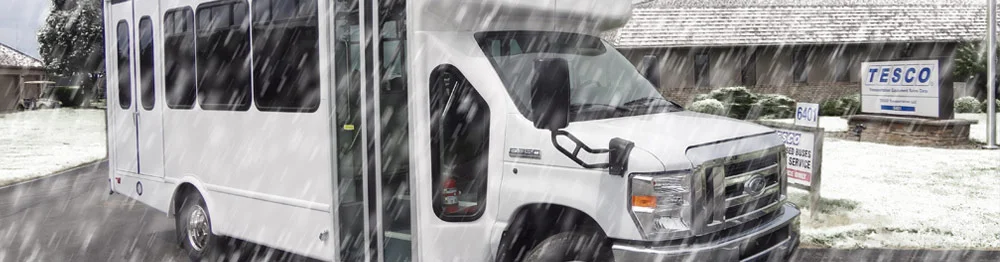
Making sure your bus is ready to brace the winter weather is an important process to ensure road safety and a warm, comfortable ride for passengers. At TESCO we want to make sure our customers have all the information they need to protect drivers, passengers, and their investment. Organizations are often allotted a certain budget for transportation; by being responsible and prepared you save yourself money and a headache too.
To compile a list of winterization steps, we went straight to the source for bus service and interviewed the best in the business, TESCO bus guru, Fred Mahaney. Fred has over 20 years in automotive service experience, with over 7 years in the bus industry as the service manager at TESCO.
Here are 9 steps to winterize your bus according to Fred:
- Checking Both Batteries. Checking your batteries for corrosion is a basic but necessary step in winterization. Make sure both batteries are able to hold a charge. A bus that doesn't start in the dead of winter is dangerous for passengers. This could also affect your vehicle's wheelchair lift.
- Coolant Protection Level. By making sure your coolant levels are in good standing you are avoiding a much larger issue. If your levels are too low and the cold weather causes the coolant to freeze, an internal engine issue could arise.
- Check Front Factory Heater. Before sending your bus to transport passengers in cold weather, it is important to make sure your bus is actually heating. Simply make sure heat is coming out and observe your blower speed. No one wants to ride in a cold bus!
- Check Operations of Rear Heater and Valves. There are rear water valves that may be in off position that must be turned on to allow hot water to circulate. Also, check the blower fan to make sure it is free from debris and operating correctly.
- Re-seam Bus and Check Caulk. Over time melting snow and ice can severely damage a bus. Check all of the caulk for cracking and missing pieces. If caulk is missing it can cause water leaks into onto the floor and even result in electrical issues.
- Check Tires. Having a good set of tires in winter is one of the most important safety measures to take. First, make sure your tires have enough thread to take on adverse weather. If the thread is too low you could find yourself sliding. Second, check your tire's air pressure. Low air pressure could cause uncomfortable vibration and even a blow out. Lastly, check that the tires are not dry rotted.
- Check Brakes. A standard, but crucial step in preparing your bus for winter. Make sure that there is good lining left on the pads and your rotors are not rusted. This could cause increased breaking effort and when matched with an icy road could be a dangerous mix.
- Check Wipers. In the event of a snowstorm or freezing rain, a good pair of wipers are a driver's best friend. By making sure your wipers are installed correctly and not ripped, you are setting yourself up for ideal visibility even in bad weather.
- Check Lights. By keeping your interior and exterior lights working you are making it easier for the driver to see and the bus to be seen.
Have you winterized your bus yet? Do you have a question about a step in the process? Give us a call! Our professional and knowledgeable staff is here to help you every step of the way.
Contact TESCO at 800.227.3572 or visit our website at tescobus.com.