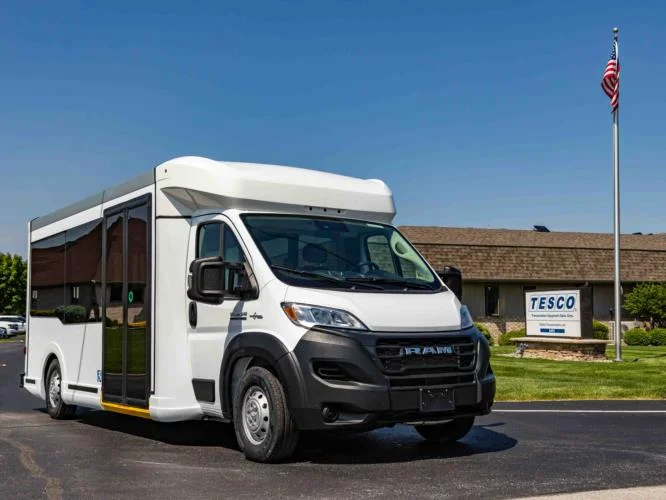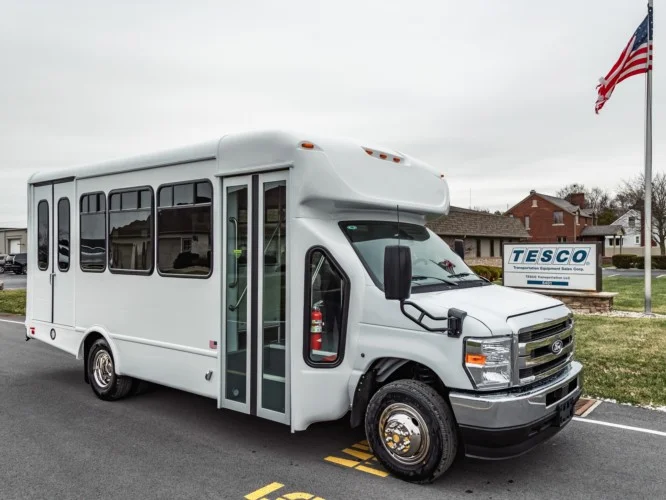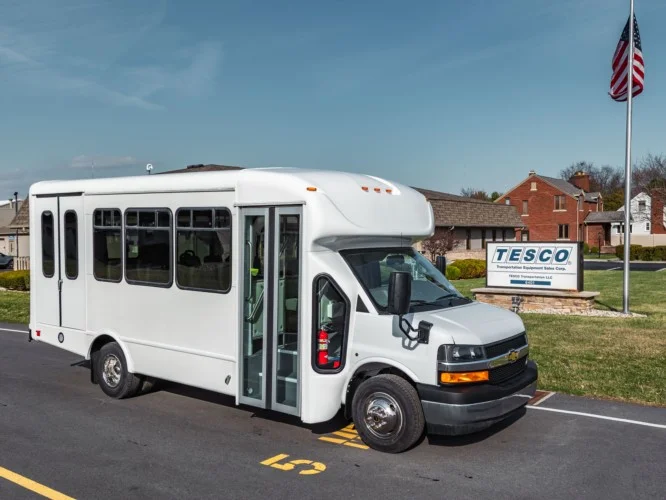
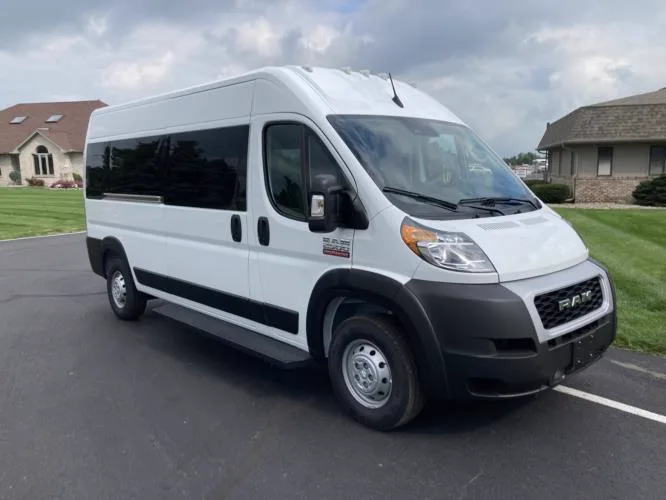
Ramp or lift
A ramp minivan loads faster and costs less to maintain; a lift van handles power chairs and heavier riders and carries more people. Most NEMT and ambulette fleets run both and dispatch by trip.
The vehicle you followed a link to has sold. Here are the NEMT & ambulette vans on TESCO's lot today.
Healthcare
Wheelchair-accessible vans for non-emergency medical transport (NEMT) and ambulette service: dialysis, clinic and discharge runs, every day.
NEMT van, ambulette, medical transport van: the name changes with the state and the broker, the job does not. It is a wheelchair van that earns its keep on medical schedules: dialysis three times a week, oncology appointments, discharges, and the standing pickups that keep a non-emergency medical transport business running. The vehicle has to load a chair quickly, secure it properly, and do it again forty times a day without wearing out the driver.
TESCO covers this work from two directions. Ramp-equipped minivans, BraunAbility conversions of the Chrysler Voyager and Pacifica, handle one or two chairs with the lowest operating cost in the category. Lift-equipped Ford Transit vans and low-floor RAM ProMaster vans carry more chairs and more ambulatory riders when a route mixes both. Every unit leaves Oregon, Ohio with securements installed and inspected.
Buyer's guide
The decisions that matter for NEMT & ambulette vans, the ones a rep will walk through with you before the build sheet.
A ramp minivan loads faster and costs less to maintain; a lift van handles power chairs and heavier riders and carries more people. Most NEMT and ambulette fleets run both and dispatch by trip.
Four-point tie-downs with a lap-and-shoulder occupant restraint at every wheelchair position, floor tracks laid out for the chair sizes you actually carry. Ask for a securement walkthrough before delivery.
Rear-entry minivans park anywhere and keep the curb side clear; side-entry gives the passenger a forward-facing position and works better where the vehicle backs to a wall.
Grab handles, a low step-in and a compact lift control save a driver's back over a 200-stop week. It shows up in turnover before it shows up on a spec sheet.
Medicaid brokers and state NEMT programs often specify securement standards, first-aid equipment, signage and inspection intervals. Bring the contract language and TESCO will spec to it.
A dialysis patient can't wait for a shop. Choose a chassis with a dealer network near your routes, and keep a spare vehicle in the plan once the fleet passes four units.
Fits this work
The platforms TESCO specs most often for NEMT & ambulette vans. Each links to its model or brand page.
Wheelchair-accessible minivan

Full-size passenger van

Full-size passenger van

Also fits this work: ADA Toyota Minivan Sienna-based ramp conversion for fleets that standardize on Toyota.
On the lot
Live from TESCO's lot, matched to NEMT & ambulette vans by body type. Open any panel for photos, floorplans and pricing.
Chrysler Voyager
Max Pass: 5
Chrysler Voyager LX
Max Pass: 5

Chrysler Pacifica LX
Max Pass: 4

Ford Transit X2C-XL
Max Pass: 7

Ford Transit X2C-XL
Max Pass: 7
Ford Transit X2C-XL
Max Pass: 7
Chrysler Pacifica Touring 2024
Max Pass: 5
7,374 miles

Chrysler Voyager LX 2023
Max Pass: 5
40,208 miles

Chrysler Voyager LX 2023
Max Pass: 5
42,162 miles

Keep browsing
Every new order and pre-owned unit in the body types that fit NEMT & ambulette vans, with filters, photos and pricing.
Questions
No. NEMT and ambulette vans carry well under the passenger count that triggers a commercial license. Individual states and brokers do set their own driver training and certification requirements, so check the program you'll be transporting for.
Most start with a rear-entry ramp minivan: lowest purchase price, lowest running cost, and it handles the majority of manual-chair trips. Add a lift van when your bookings include power chairs, bariatric riders or trips with several ambulatory passengers.
Yes. Send the contract's vehicle requirements (securement standard, signage, first-aid kit, fire extinguisher, inspection items) and the unit is built and documented to match before delivery.
In-stock units ship within days once paperwork clears. Builds to a specific spec depend on chassis and conversion lead times, which your rep will quote up front.
Bus blog

What a compliant wheelchair securement station includes, how a four-point tie-down works, and the mistakes that fail inspections, explained by the dealer that installs and warranties Q'Straint systems.
Sep 4, 2026 Read →
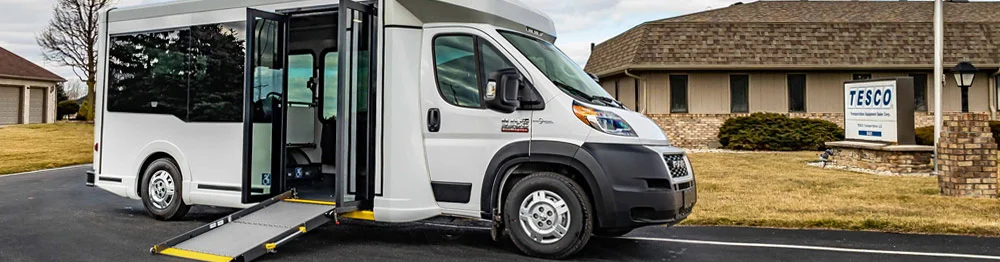
Lifts and ramps are different options for wheelchair-accessible vehicles, but both have the same goal of providing accessibility for users.
Jan 17, 2025 Read →
With 331 wheelchair-accessible units in stock and more than 95 ARBOC low-floor buses sold and stocked for customers in 9 states, TESCO is one of the nation's leading dealers for senior living and ADA transportation.
Sep 4, 2026 Read →
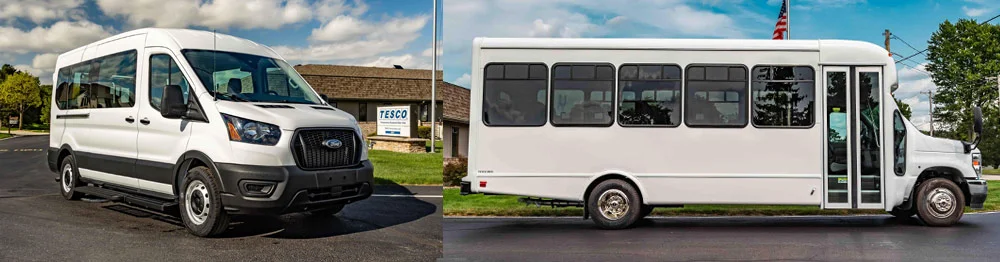
The federal 15-passenger-plus-driver rule, the GVWR threshold, and how states differ, plus the non-CDL bus options senior living facilities, churches, and child care centers buy to keep any licensed staff member behind the wheel.
Sep 4, 2026 Read →
Related uses
Tell a TESCO rep what your routes look like and they'll come back with a build sheet, a delivery date and a price, whether you buy new, buy pre-owned or lease.