Wheelchair census drives the layout
Count the chairs on your roster on the heaviest day, then add one position. Flip-up seats over the tracks give back ambulatory capacity on lighter days.
The vehicle you followed a link to has sold. Here are the adult day care buses on TESCO's lot today.
Healthcare
Daily-route buses for adult day programs: door-to-door pickups across a metro area, with the wheelchair positions the census actually needs.
Adult day programs run the hardest schedule in senior transportation: a morning pickup sweep and an afternoon drop-off, every weekday, across a service area that changes as enrollment changes. The bus is on the road four to six hours a day and every stop is a curbside boarding.
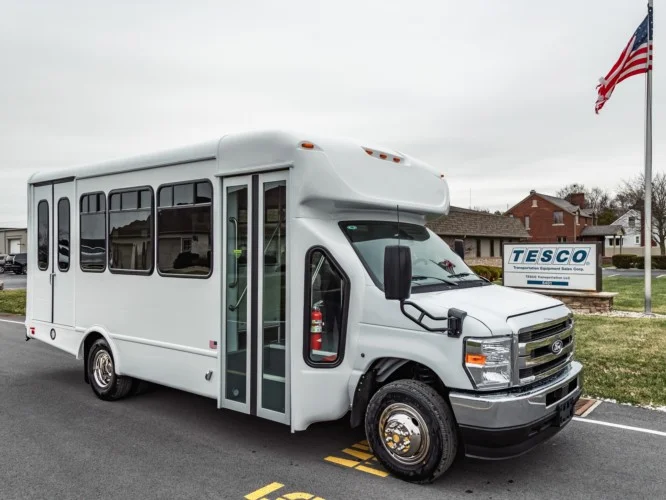
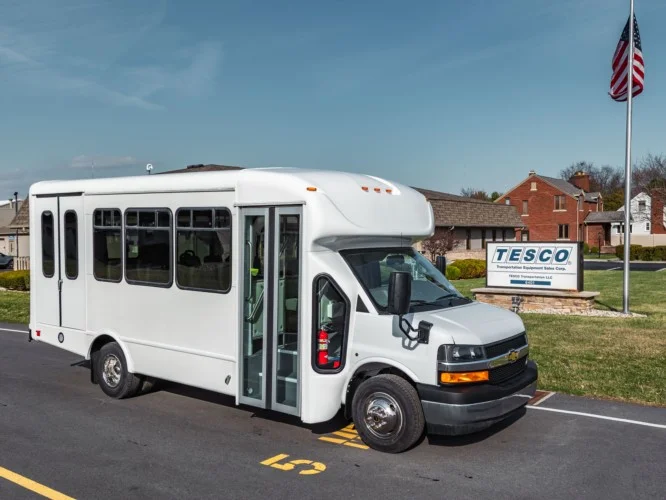
That duty cycle rewards a light-duty cutaway bus (Ford E-350 or E-450, Chevrolet 3500) with a lift and flip seats over the wheelchair tracks, driven by staff who don't need a CDL. Programs with a heavier wheelchair census move to low-floor buses that board by ramp and cut the lift cycle out of every stop.
Buyer's guide
The decisions that matter for adult day care buses, the ones a rep will walk through with you before the build sheet.
Count the chairs on your roster on the heaviest day, then add one position. Flip-up seats over the tracks give back ambulatory capacity on lighter days.
Twenty stops a morning with a lift adds up. A faster lift, or a low-floor ramp, can take fifteen minutes off a route, which is one more pickup or one less late arrival.
Fourteen passengers plus the driver keeps every aide and driver on staff eligible to take the bus out. Two non-CDL buses often beat one large one for a growing program.
The bus idles at every stop. Rear air and heat with adequate capacity, and a chassis that tolerates idling, keep riders comfortable and the engine out of the shop.
State licensing and Medicaid waiver programs often require specific inspections, securement standards and driver files. TESCO documents the build to the requirement so licensing visits go smoothly.
One bus down means a route down. Programs with three or more buses should plan a spare or a short-term rental arrangement.
Fits this work
The platforms TESCO specs most often for adult day care buses. Each links to its model or brand page.
Light-duty bus

Light-duty bus

Low-floor minibus

Also fits this work: ARBOC low-floor buses Kneeling low-floor cutaways for programs that have outgrown the lift.
On the lot
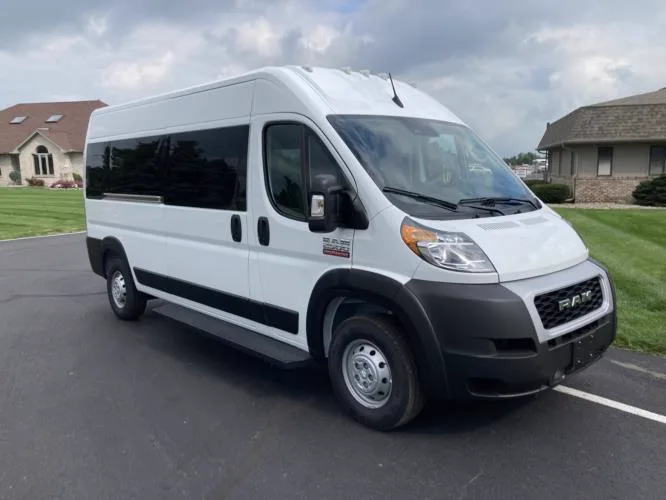
Live from TESCO's lot, matched to adult day care buses by body type. Open any panel for photos, floorplans and pricing.
Ford E350 DRW
Max Pass: 13

Chevrolet G-3500
Max Pass: 14
Ford E350 DRW
Max Pass: 14
Ford E350 DRW
Max Pass: 14

Ford E350 DRW
Max Pass: 14

Ford E450
Max Pass: 14

Ford E350 2021
Max Pass: 6
19,877 miles

Ford E350 2015
Max Pass: 9
14,060 miles
Ford E350 2021
Max Pass: 9
46,748 miles

Keep browsing
Every new order and pre-owned unit in the body types that fit adult day care buses, with filters, photos and pricing.
Questions
Most programs run 12-to-14-passenger buses with two to four wheelchair positions so no driver needs a CDL. As enrollment grows, adding a second bus of the same spec usually beats stepping up to a larger, CDL-only vehicle.
Yes. That midday window between routes is exactly what a flexible layout with flip seats is for. Some programs add an ADA minivan for single-client appointments so the bus stays free.
If half or more of your riders use a chair or walker, yes: boarding by ramp is faster and gentler, and there's no lift to inspect and maintain. For mostly ambulatory rosters a lift bus is the better value.
Yes. TESCO sells to programs funded through Medicaid waivers, state aging programs and federal grants and can supply the documentation those purchases require.
Bus blog

Shuttle buses provide significant advantages for senior citizens, including easier entry/exit, wheelchair accessibility options, and potential driver licensing flexibility.
Nov 7, 2018 Read →

Lifts and ramps are different options for wheelchair-accessible vehicles, but both have the same goal of providing accessibility for users.
Jan 17, 2025 Read →

What a compliant wheelchair securement station includes, how a four-point tie-down works, and the mistakes that fail inspections, explained by the dealer that installs and warranties Q'Straint systems.
Sep 4, 2026 Read →
Driving a commercial vehicle takes more attention than driving a car. Thorough pre- and post-trip inspections keep drivers and passengers safe.
Dec 9, 2024 Read →
Related uses
Tell a TESCO rep what your routes look like and they'll come back with a build sheet, a delivery date and a price, whether you buy new, buy pre-owned or lease.